Port Contour Cutters vs. Cavity Tools – What's the Difference?
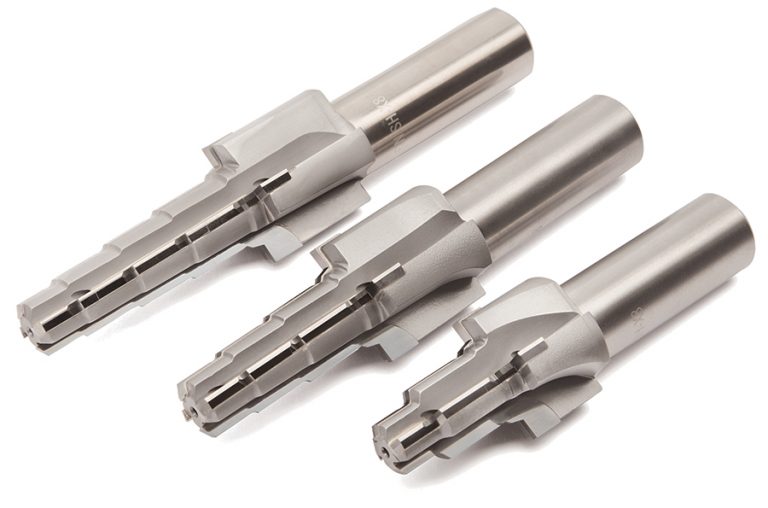
Although the names are sometimes used interchangeably, Port Contour Cutters and Cavity Tools perform two different machining operations when manufacturing hydraulic manifolds. Understanding the distinction helps machine shops choose the correct tooling, improve sealing performance, and reduce costly machining errors.
What is a Port Contour Cutter?
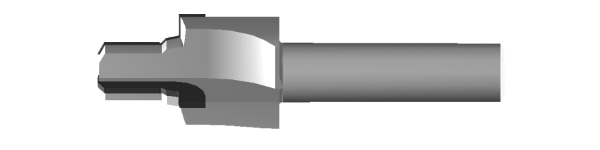
A Port Contour Cutter machines only the sealing surface surrounding a hydraulic port. The tool creates the precise profile required for O-rings, bonded seals, or sealing washers used by SAE, ISO and other hydraulic standards.
The threaded hole has already been drilled and tapped. The contour cutter simply machines the critical sealing geometry around the opening to ensure leak-free hydraulic connections.
- Machines the sealing face
- Produces the O-ring groove profile
- Ensures proper seal compression
- Used after drilling and tapping
- Common on hydraulic manifolds and valve blocks
What is a Cavity Tool?
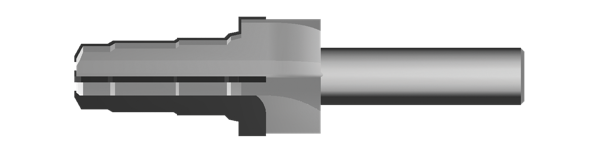
A Cavity Tool machines the complete internal cavity required for a hydraulic cartridge valve. Unlike a contour cutter, a cavity tool produces multiple diameters, shoulders, counterbores and sealing surfaces in one operation.
Hydraulic cartridge valves rely on accurately machined cavities so that internal O-rings seal correctly while allowing the valve to seat at the proper depth.
- Machines the complete valve cavity
- Produces multiple diameters
- Creates precision shoulders
- Maintains valve depth tolerances
- Often combines several machining operations into one tool
Main Differences
| Feature | Port Contour Cutter | Cavity Tool |
|---|---|---|
| Purpose | Machines sealing surface | Machines complete cartridge valve cavity |
| Typical Use | Hydraulic ports | Hydraulic cartridge valves |
| Produces Thread? | No | No |
| Machines O-ring Profile? | Yes | Yes |
| Machines Internal Diameters? | No | Yes |
| Creates Valve Seat? | No | Yes |
| Typical Operation | Final finishing operation | Primary cavity machining operation |
How They Work Together
Many hydraulic components require both operations. A manifold may first have a complete cartridge valve cavity machined using a cavity tool. Additional hydraulic ports are then drilled, tapped and finished using port contour cutters.
Although both tools produce precision sealing surfaces, they are designed for different machining tasks and should not be considered interchangeable.
Applications
- Hydraulic manifolds
- Valve bodies
- Hydraulic power units
- Mobile hydraulic equipment
- Industrial hydraulic systems
- Pneumatic valve blocks
- Custom hydraulic manifolds
Benefits of Dedicated Port Contour Cutters
- Consistent sealing geometry
- Reduced hydraulic leaks
- Excellent surface finish
- Long tool life
- Fast machining cycles
- Repeatable dimensions
- Ideal for CNC production
Benefits of Dedicated Cavity Tools
- Multiple machining operations in one tool
- Excellent concentricity
- Reduced setup time
- Lower cycle time
- Improved valve performance
- Reduced scrap rates
- High production efficiency
Selecting the Correct Tool
Selecting the proper tool depends on the hydraulic standard being manufactured. SAE, ISO, CETOP, Sun Hydraulics, HydraForce, Parker, Bosch Rexroth and many other cartridge valve manufacturers publish precise cavity dimensions that must be accurately reproduced during machining.
Using tooling designed specifically for these standards ensures dimensional accuracy, proper valve fit and long-term sealing performance.
Newman Tools Supplies Hydraulic Port Machining Tools
Newman Tools supplies professional-quality Port Contour Cutters, Cavity Tools, pilot drills , taps and related tooling used for machining hydraulic manifolds and cartridge valve cavities. Whether producing prototype components or high-volume CNC production, precision tooling helps achieve reliable sealing surfaces and repeatable results.
Frequently Asked Questions
Can a port contour cutter machine a cartridge valve cavity?
No. A port contour cutter only machines the sealing profile around the hydraulic port. It cannot produce the multiple diameters and shoulders required for a cartridge valve cavity.
Does a cavity tool also create the sealing surface?
Yes. Most cavity tools machine both the internal cavity and the precision sealing surfaces required for cartridge valve O-rings.
Are hydraulic cavity tools standardized?
Most are manufactured to published standards established by hydraulic component manufacturers such as SAE, ISO and individual cartridge valve manufacturers.
Why is surface finish important?
Poor surface finish can damage O-rings and cause hydraulic leaks. Precision tooling helps produce consistent sealing surfaces with the required finish and dimensional accuracy.
Trademarks are the properties of their respective owner(s).